

Key Highlights
- Understand the difference between ‘Full-Grain’, ‘Top-Grain’, and ‘Split’ leather to gauge durability.
- Authentic quality leather will possess an inconsistent, natural grain and a distinct, rich aroma.
- Avoid leather that feels unnaturally cold, smooth, or uniform, as this often indicates heavy processing or synthetic components.
- Quality leather should feel soft, supple, and warm to the touch, and develop a natural patina over time.
Introduction
In the quest for luxurious and long-lasting home furnishings, a leather sofa remains a timeless choice. However, navigating the modern marketplace can feel like traversing a minefield of confusing terms. Marketers use an array of attractive but sometimes misleading phrases-from ‘genuine leather’ to ‘bonded leather’-which can obscure the true quality of the material. When you are looking to invest in a premium item, such as a high-end leather sofa in Singapore, it is crucial to move beyond the marketing noise. Realising the difference between genuine quality and clever labelling is the first, most important step to securing an investment that will stand the test of time and provide enduring comfort. This article provides a comprehensive guide on how to employ your senses and simple knowledge to accurately assess the calibre of leather and ensure you receive the value you expect from a premium purchase.
Understanding Leather Terminology
The first step in discerning quality is understanding the hierarchy of leather types. The most prestigious and durable is full-grain leather. This refers to the entire hide, retaining its natural grain, markings, and imperfections. Because it hasn’t been sanded or buffed, it maintains the strongest natural fibres, making it exceptionally resilient. Full-grain leather also develops a beautiful patina, deepening in colour and character as it ages. Top-grain leather is the second tier; while the top layer is still intact, it has been lightly sanded to remove blemishes and then pigmented.
This makes the leather more uniform but sacrifices some of the strength and breathability of full-grain. Finally, terms like ‘genuine leather’ or ‘corrected grain’ often refer to leather from the lower layers of the hide, which is heavily processed, sanded, and stamped with an artificial grain pattern to hide defects. When browsing in a furniture shop in Singapore, remember that high-quality pieces rarely hide behind vague descriptors; they proudly specify ‘full-grain’ or ‘top-grain’ and usually offer transparency on their sourcing.
The Touch and Feel Test
Your hands are some of the most effective tools for quality inspection. Real quality leather should feel warm and supple to the touch, not cold or plastic-like. As you press your finger into the surface, genuine leather will wrinkle and stretch slightly, much like human skin. Conversely, lower-quality or synthetic materials will feel rigid and smooth, often springing back without creasing. Furthermore, quality leather is breathable. If you place your palm flat on the surface for a few seconds, it should remain comfortable and not feel clammy or excessively warm, a trait commonly associated with synthetic blends.
Do not overlook the smell test. Real leather possesses a rich, organic, and unmistakable aroma, a distinct difference from the chemical or plastic scent often emitted by fake or heavily treated leathers. This sensory inspection is immediate and often reveals the truth quicker than any written tag.
Examining the Grain and Surface
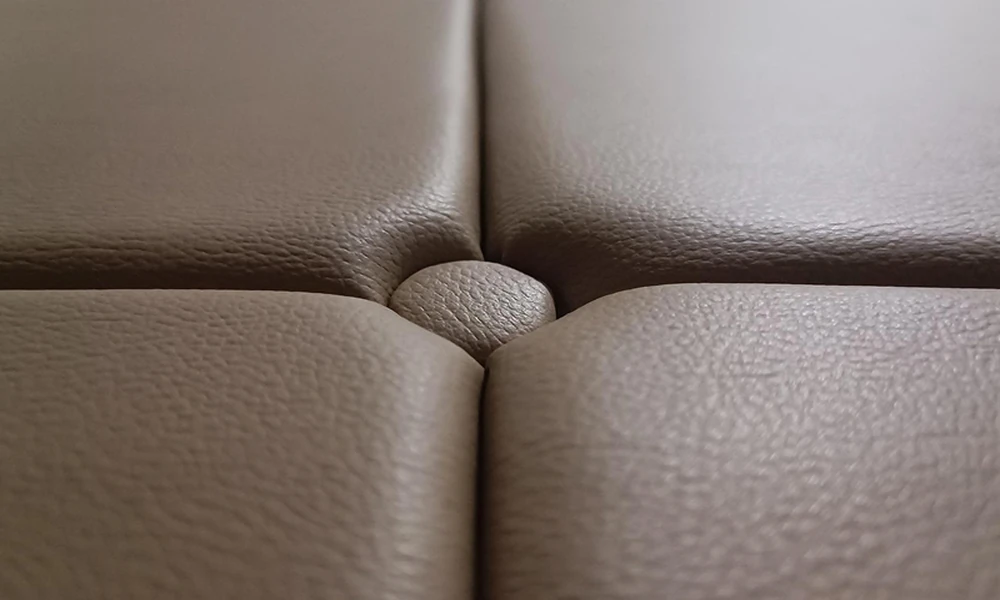
Look closely at the surface of the leather. High-quality full-grain leather will display inconsistencies in its texture and colouring. You might notice small scars, creases, or variations in the pore pattern. These are not flaws; they are the hallmarks of authenticity and prove that the material is natural and unique. If the material presents a completely uniform and flawless pattern across the entire surface of, say, a three-seater, you should be instantly suspicious. This level of uniformity points directly toward heavily corrected or artificially stamped grain, a process used on weaker hides.
Pay attention to the edges as well. Genuine leather has visible, distinct layers. If the edge appears thin or has a fabric mesh backing, you are likely looking at vinyl, bonded leather, or another imitation. These visual cues are crucial in separating genuine, durable leather from materials designed purely to look appealing in the showroom lights.
Checking the Price and Provenance
While price alone is never the sole indicator of quality, high-quality leather is inherently expensive due to the demanding tanning process and the limited availability of high-grade hides. If a deal seems too good to be true for a purported ‘full-grain’ piece, it almost certainly is. Authentic, quality leather requires a significant financial investment. When researching or speaking with a salesperson, ask directly about the leather’s origin and the tanning process used.
A reputable retailer will be transparent about their sourcing and proudly discuss the quality of their material, offering detailed information rather than relying solely on abstract marketing terms. They understand that a knowledgeable customer is a satisfied, long-term patron. Always seek out clear guarantees regarding the leather type, as this provides a valuable layer of confidence in your long-term investment.
Conclusion
Choosing quality leather is a process that requires moving beyond the colourful rhetoric of the showroom. By applying a keen eye to the grain, trusting your sense of touch and smell, and understanding the core terminology, you empower yourself to make an informed decision. Investing in real quality leather means purchasing not just a piece of furniture, but a durable, comfortable, and beautiful heirloom that will age gracefully alongside your home. Do not settle for less than the best; true quality is worth the commitment.
Contact TheFurniture today to speak with one of our specialists about selecting the perfect high-quality leather piece for your home.